COL4A1 and COL4A2-Related Disorders: Research and Treatment Development
COL4A1 and COL4A2-related disorders affect type IV collagen and can involve small blood vessels in the brain and other organs. Our collagen project investigates disease mechanisms and experimental therapies, alongside resources to understand diagnosis and current care.
Understanding the condition
Type IV collagen and small blood vessels
COL4A1 and COL4A2 provide instructions for two chains of type IV collagen. Together, these help form basement membranes: thin supporting layers around blood vessels and other tissues. Disease-causing variants can affect this support network, with consequences for vessel integrity and organ function. COL4A1 disease overview
Gould syndrome is used by patient organisations and some clinical resources as an umbrella name for the spectrum associated with disease-causing COL4A1 or COL4A2 variants. Clinical reports may instead describe a specific presentation, such as porencephaly, small-vessel brain disease or HANAC syndrome. The name does not mean all presentations, variants or treatment needs are identical. Gould Syndrome FoundationClinical recommendations
Understanding the condition
Inheritance and variation between families
Many COL4A1/COL4A2 disorders are autosomal dominant: a disease-causing variant in one copy of a gene can be sufficient. In this situation, each child of a person carrying the variant has a 50% chance of inheriting it. Variants can also arise for the first time in a child. Rarer inheritance patterns have been reported, so counselling should use the specific genetic result.
The same family can include people with very different features. A genetic result helps explain a cause but does not, by itself, predict an individual's course. Inheritance and clinical spectrum
Understanding the condition
Brain and other organ involvement
Possible brain features include bleeding, stroke, seizures, developmental difficulties and porencephaly, where a fluid-filled cavity forms after early brain injury. Some people are diagnosed in childhood; others first come to attention in adulthood. Eye abnormalities, kidney involvement and muscle symptoms can also occur, with patterns that differ between people. Clinical features
Diagnosis combines the clinical picture, brain imaging and genetic testing. A specialist may arrange eye, kidney or other assessments depending on the findings. A pathogenic or likely pathogenic variant supports diagnosis; a variant of uncertain significance requires further interpretation and should not be treated as proof on its own. Diagnosis and assessment
Understanding the condition
Current management and family support
Management is tailored to the organs affected. It may include treatment of seizures, rehabilitation, developmental support and care for eye or kidney complications. Blood-pressure management and avoiding smoking are relevant to vascular health.
Bleeding risk, activities that could cause head injury, pregnancy and medicines that affect clotting deserve individual discussion with the clinical team. There is no single management plan for every COL4A1/COL4A2 presentation. The 2025 clinical recommendations support coordinated care across appropriate specialties. Management overviewUpdated clinical recommendations
Understanding the condition
Experimental treatment development
Published evidence: Our collagen gene-editing review describes approaches across different collagen disorders, including CRISPR-based methods. Results in another collagen disease cannot be assumed to apply to COL4A1/COL4A2-related brain disease. Read the published review
Our research: Led by Dr Klaudia Kocsy, this project investigates disease-relevant models, drug repurposing and gene-targeted correction strategies. The team's public project contributions are described below. These are experimental approaches, not treatments currently offered through CSVD Therapeutics.
Future aims: Establish whether candidates improve meaningful disease readouts, reach the relevant cells and meet safety requirements. Drug repurposing still requires evidence for the new indication; existing use for another condition does not establish benefit here. Explore our therapeutic development roadmap and Sheffield clinical research.
The broader collagen research space includes Ehlers–Danlos syndromes, a distinct group of connective-tissue disorders. They are not another name for COL4A1/COL4A2 disease, and research results should be interpreted for the specific condition. Collagen disorders and research scope
Project leadership
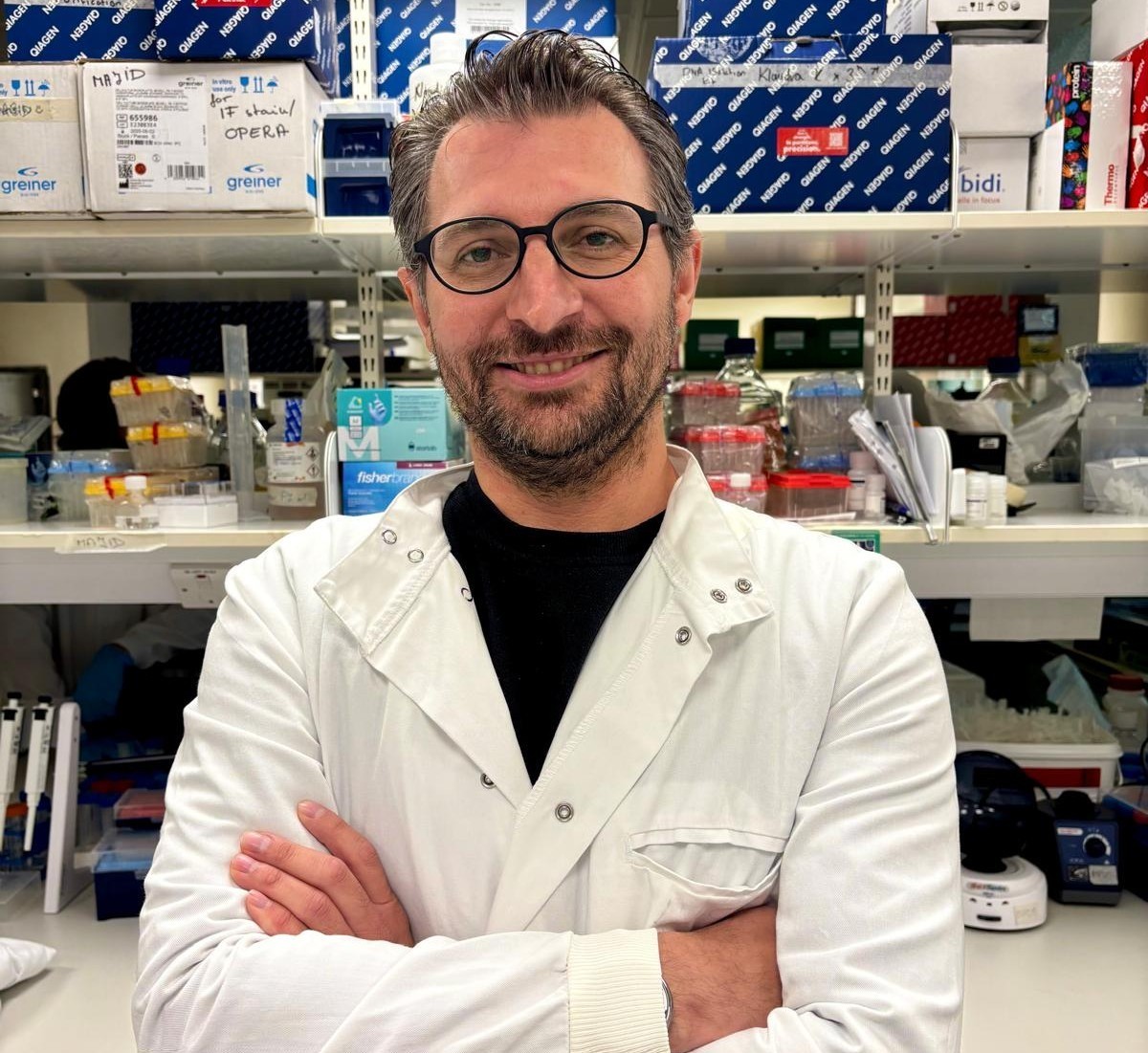
Dr Klaudia Kocsy leads the collagen-related disorders therapeutic development space.
Dr Kocsy brings vascular therapeutic development expertise to this project, focusing on disease
mechanisms, experimental model strategy, and the careful testing of candidate interventions for
collagen-related vascular pathology.
Her work connects the biological consequences of collagen gene disruption with practical therapeutic
questions: which disease readouts matter, which interventions are worth testing, and what evidence is
needed before a therapeutic concept can move toward translation.
People and projects
A growing collagen-related disorders research space.
Dr Klaudia Kocsy leads this project, connecting vascular disease biology with therapeutic testing and
experimental strategy for collagen-related disorders.
Dr Güven Akçay
Visiting Scholar
2026–present
Dr Güven Akçay joined the team as a visiting scholar from Bolu Abant İzzet Baysal
University, Türkiye, supported by TÜBİTAK funding. His research focuses on COL4A2 mutations and gene
therapy approaches for cerebral small vessel disease.
Harry Wilkinson
PhD student
PhD, 2023–27
Designed and tested novel plasmids for correcting COL4A1 mutations using CRISPR editing.
Kieran PJ Cawley
PhD student | Former MSc student
MSc Molecular Biology and Biotechnology, 2025–26
PhD student, 2026–present
Contributed to COL4A1 correction work during his MSc project. Kieran subsequently joined the team as a
PhD student, supporting the continued development and experimental validation of collagen-related
therapeutic approaches.
Zuzanna Sokolowska
Past MSc in Translational Neuroscience
MSc Translational Neuroscience, 2024–25
Tested drug repurposing approaches in COL4A1 disorders.
Dragos Mihai Margarint
Past MSc in Translational Neuroscience
MSc Translational Neuroscience, 2024–25
Co-tested COL4A1 correction strategies using CRISPR editing.
Luke F Bolger
Past MSc in Translational Neuroscience
MSc Translational Neuroscience, 2022–23
Tested drug repurposing approaches in COL4A1 disorders.